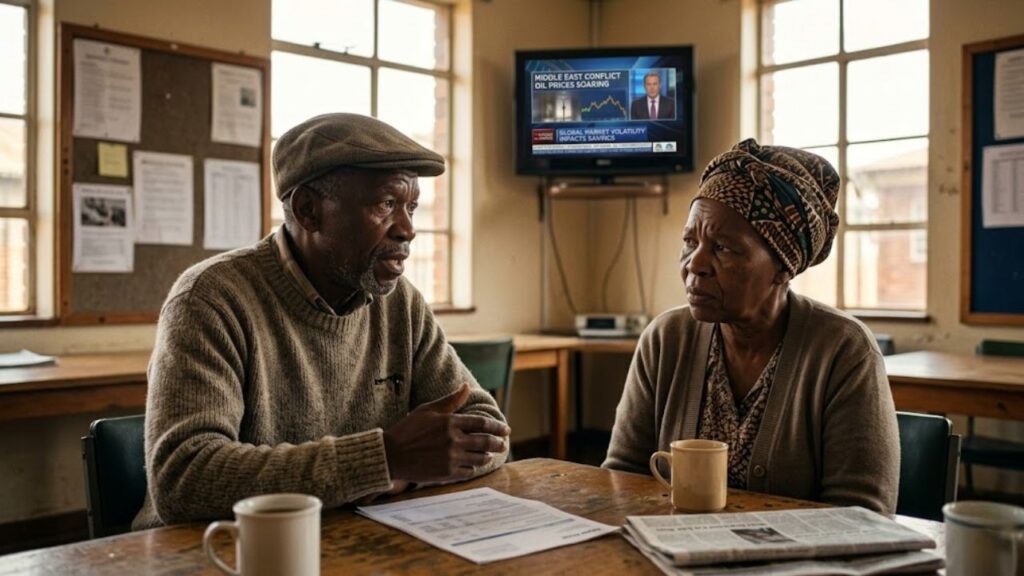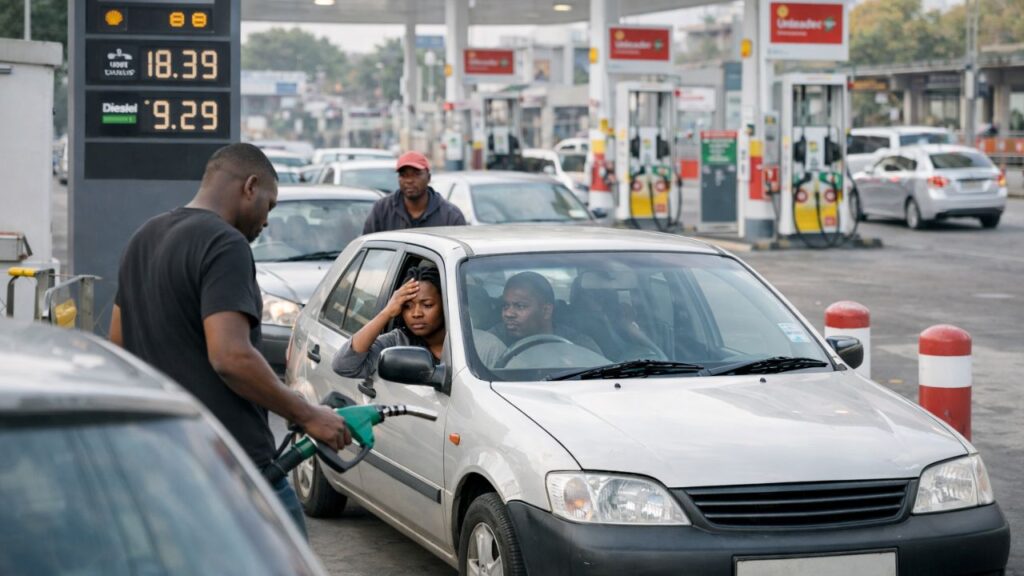
In recent weeks, fuel prices have increased throughout Africa, mostly due to the volatility of crude oil globally amid tensions in the Middle East. Significant price increases in Nigeria South Africa Ghana, Egypt, and Somalia have sparked worries about the wider social and economic ramifications.
According to the most recent data from the Central Energy Fund (CEF), the price of petrol will increase by nearly R4.00 per litre for April, before fuel levy increases are taken into account. This means that South African drivers will be in for a terrible month.
Recoveries have continued to worsen, according to the CEF’s market snapshot for the end of the second week of March.

Diesel prices are even worse, with an under-recovery of between R6.63 and R6.75 per litre, while petrol prices are showing an under-recovery of between R3.62 and R3.98 per litre.
With the fuel exhibiting the worst under-recovery at R8.53 per litre, those who rely on illuminating paraffin are also in for a shock.
The anticipated levels at the conclusion of the second week are as follows:
- Petrol 93 362 cents more per liter
- Petrol 95 increase of 398 cents per litre
- Diesel 0.05% wholesale: 663 cents more per liter
- Diesel 0.005% wholesale: 675 cents more per liter
- An increase of 853 cents per litre for illuminating paraffin
Due to the ongoing conflict in the Middle East, these under-recoveries show a notable decline since the beginning of the month.
The United States and Israel launched “Operation Epic Fury” against Iran on February 28, bombing the country’s capital and assassinating Ali Khamenei the country’s former supreme leader.
The conflict escalated after Iran struck US military installations in nearby nations in retaliation.
The biggest disruption has come from the rising price of oil, which has surged from less than $60 per barrel at the beginning of the year to over $110 per barrel in recent weeks even though markets were immediately shaken.
Although prices have decreased, they are still higher than $100 per barrel.
The war also ended the rand’s winning streak as investors shifted to safe-haven assets from riskier markets.
As a result, the rand fell from high levels below R16/$, returning to R17/$ and nearly undoing the gains of the previous few months.
A rise in commodities like gold and platinum has somewhat countered the decline of the rand, but it hasn’t been sufficient to reverse the broader decline in sentiment.
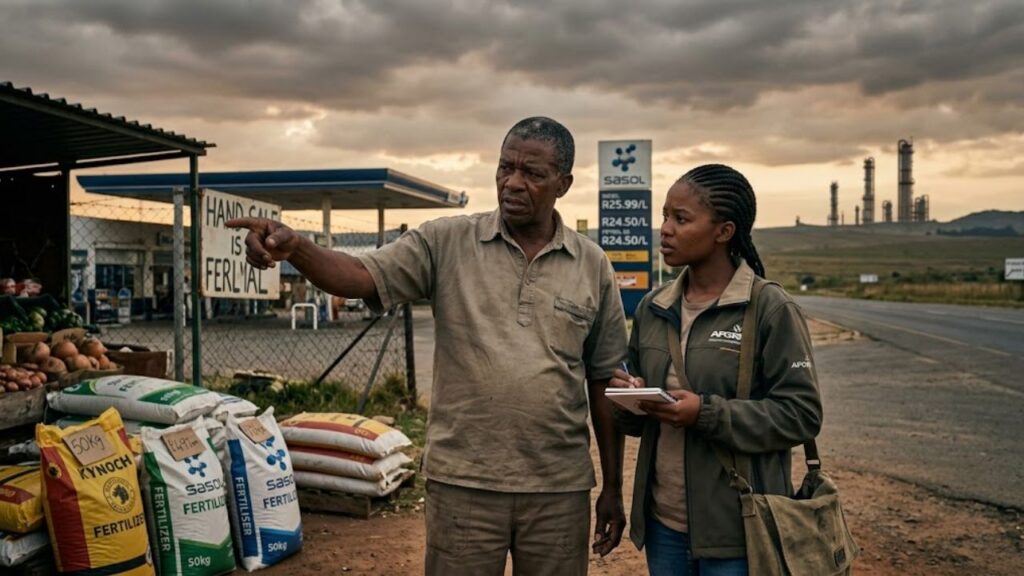
 Fuel and Fertiliser Price Warning in South Africa: Economists Cite Middle East Conflict Impact
As a result, shocks to the price of gasoline and diesel are almost certain to follow the nightmare scenario of a sharp increase in oil and a significantly weaker rand.
Fuel taxes will make things worse.
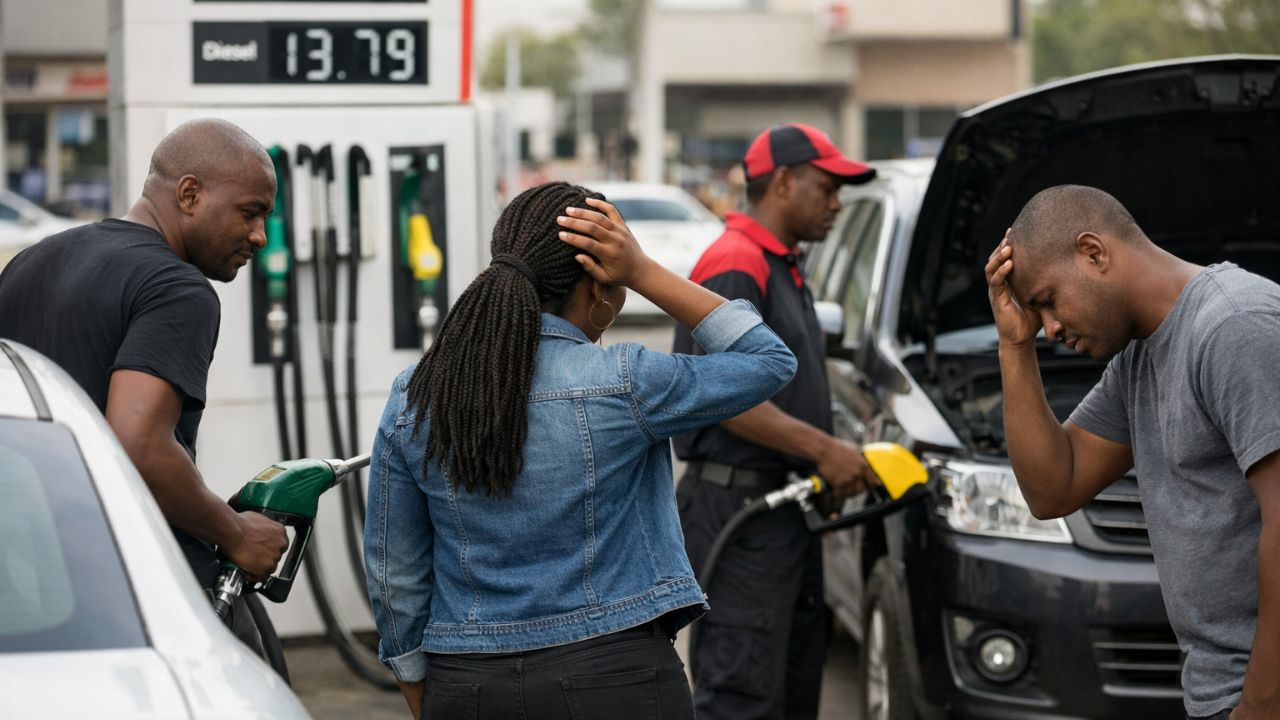
The start of South Africa’s new state financial year, which includes the implementation of tax measures, coincides with the detrimental global market equation in April.
The country did not avoid fuel levy increases, but South Africans were spared R20 billion in new tax measures for 2026—and will actually receive some inflationary tax bracket relief.
The government will impose fuel levies of 21 cents per litre starting on April 1, which will raise the cost of gasoline even further.
The upcoming tax adjustments consist of:
- For gasoline and diesel, the general fuel levy is rising by 9 and 8 cents per liter, respectively, to R4.10 and R3.93 per liter.
- For gasoline and diesel, the carbon fuel tax is rising by 5 and 6 cents per litre, respectively.
- The Road Accident Fund levy will increase to R2.25 per litre, an increase of 7 cents.
Civil Rights Organization In order to protect drivers and businesses from the impact of rising fuel prices in April, AfriForum has called on the government to abandon the upcoming tax increases.
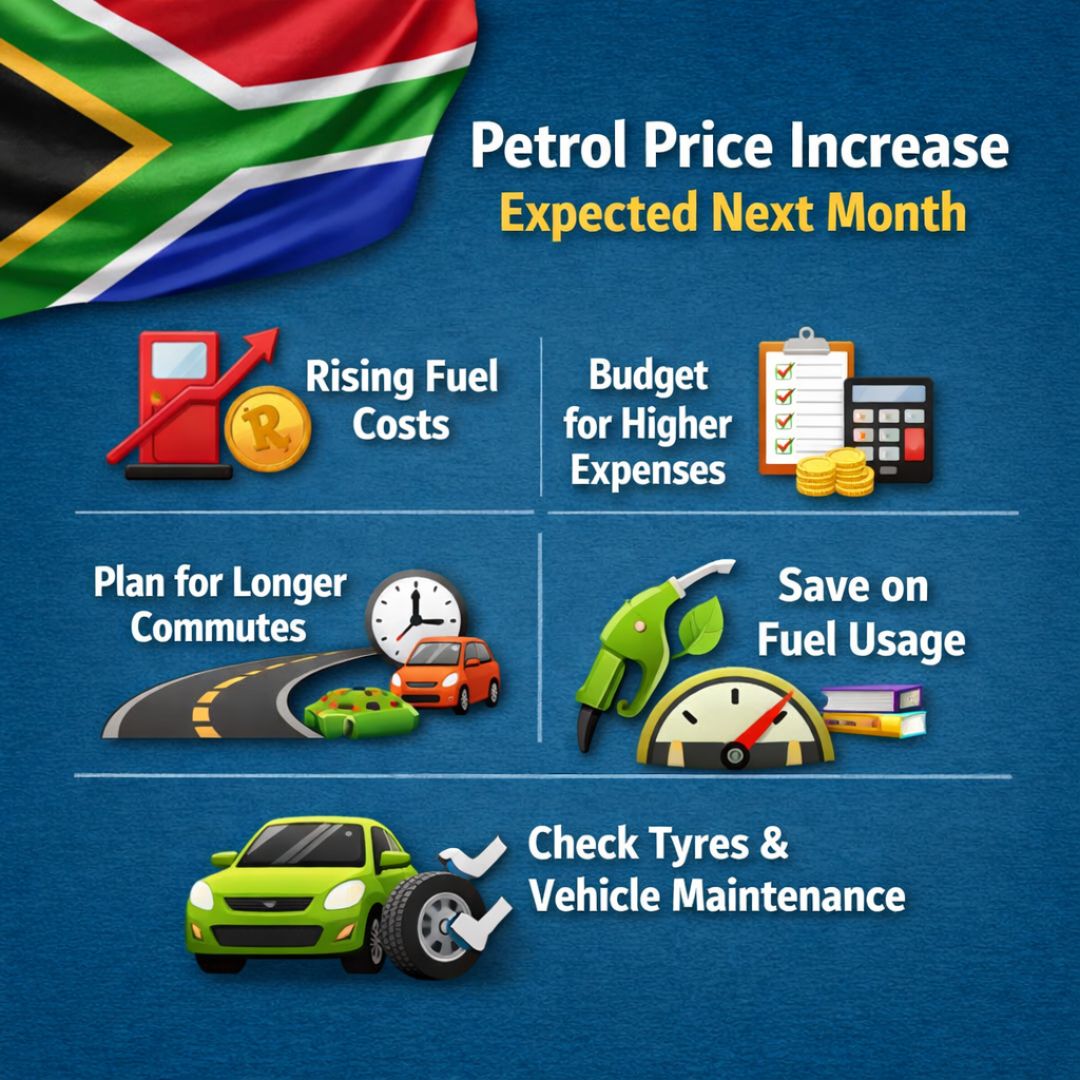
The group has written to Enoch Godongwana the Minister of Finance, pleading with him to put a temporary tax cut in place of the planned increase in the general fuel levy in order to protect consumers from the anticipated spike.
In 2022, the government implemented a similar measure that temporarily lowered the general fuel levy by R1.50 per litre.
This was done to relieve household pressure during the worldwide energy crisis brought on by the conflict between Russia and Ukraine.
As markets stabilized, the fuel levy was gradually increased back to normal (i.e., the R1.50 per litre was added again), and the tax was frozen until 2025.