
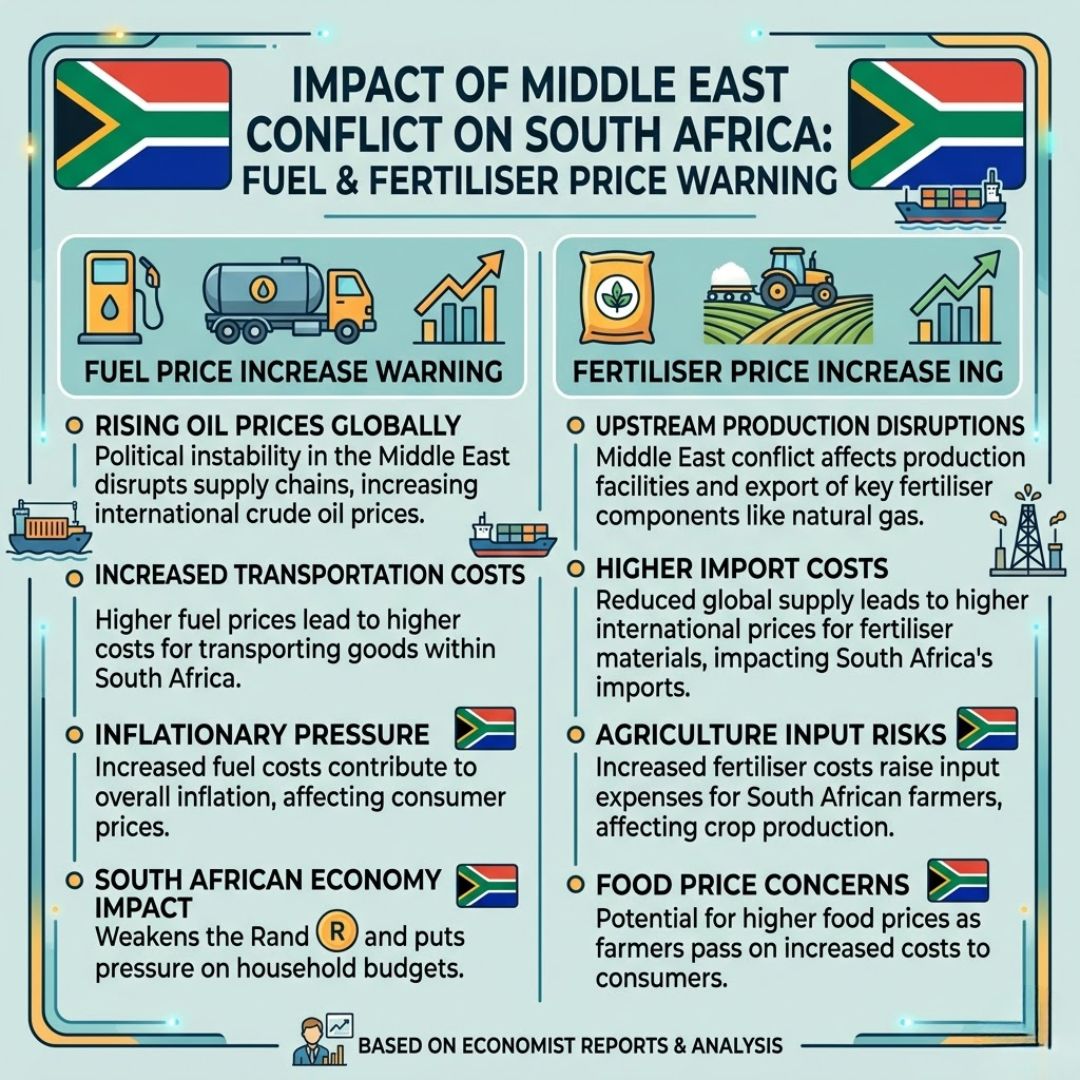
Agricultural economist Wandile Sihlobo has raised serious concerns about the growing impact of rising fertiliser and fuel prices on local farmers, mainly driven by the ongoing conflict in the Middle East. The situation is beginning to affect the agricultural sector significantly, with potential consequences for both production costs and consumer food prices.
Global Supply Disruptions Increasing Fertiliser Costs
Nearly 30% of the world’s fertiliser supply passes through the Strait of Hormuz, a critical shipping route that has recently faced disruptions. These blockages have led to higher transportation and shipping costs, which are now being passed down the supply chain. As a result, fertiliser prices are already rising and could increase further if the conflict continues for an extended period.

Heavy Dependence on Imported Fertiliser
South Africa relies heavily on imports, with around 80% of its fertiliser coming from international markets. This dependency makes the country highly vulnerable to global supply chain disruptions and price fluctuations. Any increase in international fertiliser costs directly impacts local farming operations.

Fertiliser a Major Cost for Grain Farmers
Fertiliser accounts for approximately 35% of total production costs for grain farmers, making it one of the most significant expenses in agriculture. With prices rising, farmers are facing increased financial pressure, which may lead to higher costs of production and reduced profit margins.
Fuel Prices Adding More Pressure
In addition to fertiliser, rising fuel prices are another major concern. Fuel contributes around 13% of input costs for grain farmers, which is a substantial portion. The expected fuel price hike at the beginning of April, driven by higher global oil prices, is likely to further strain the agricultural sector.

Impact on Transport and Agribusiness
The effect of fuel price increases goes beyond farming operations. Approximately 80% of South Africa’s grain is transported by road, meaning higher fuel costs will significantly increase transportation expenses. This not only affects farmers but also impacts the broader agribusiness sector, including suppliers, distributors, and retailers.
Possible Rise in Food Prices
Sihlobo warns that if fertiliser and fuel costs continue to rise, the impact will eventually be felt by consumers. Higher production and transportation costs are likely to push up food prices, placing additional pressure on households already dealing with rising living expenses.
Long-Term Concerns for the Agricultural Sector
If the conflict in the Middle East persists, the continued increase in input costs could create long-term challenges for farmers. This includes reduced production capacity, financial strain, and potential risks to food security, making it a critical issue for both the agricultural industry and the economy as a whole.